13 October 2026
Framing vs. rough-in: reading the stage from the street
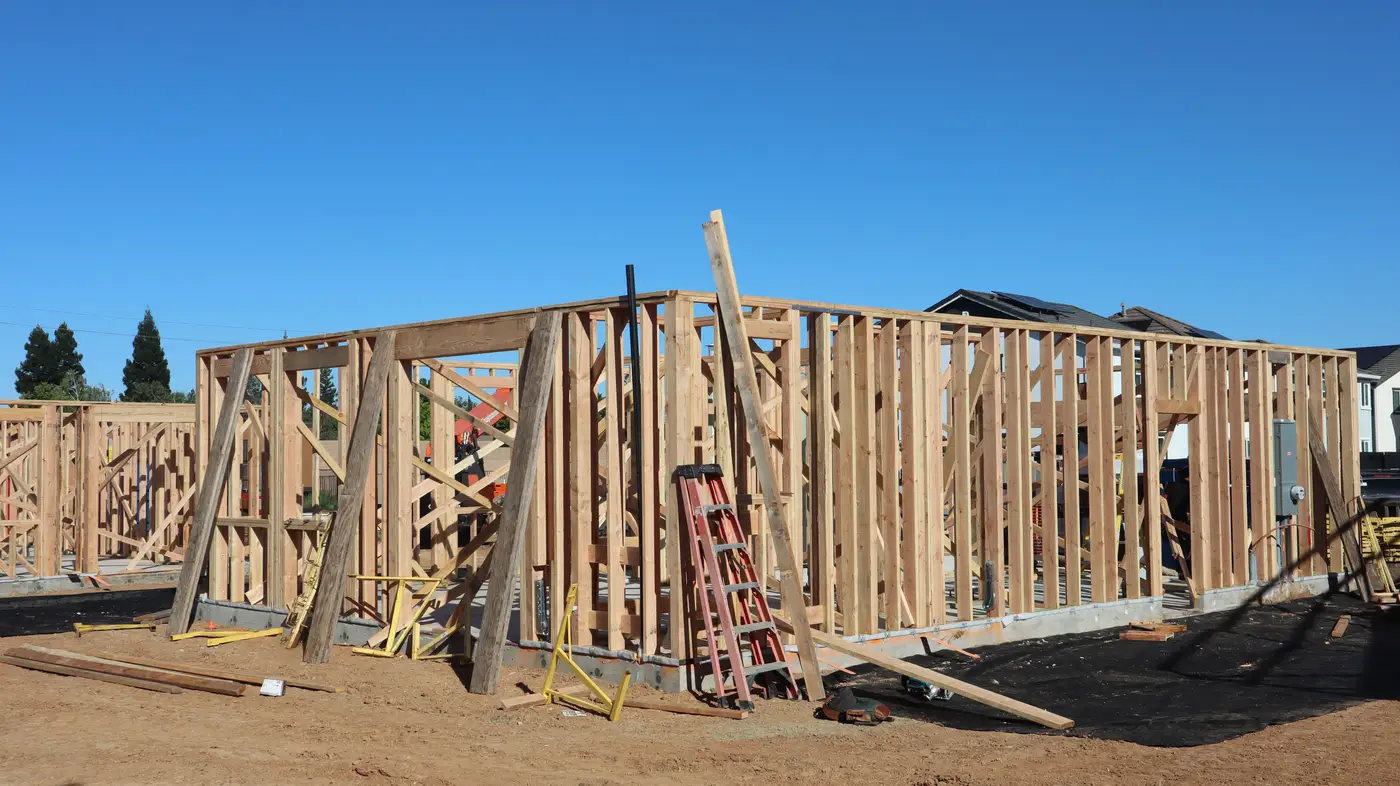
You can usually tell framing from rough-in without getting out of the truck. The trick is knowing which pile of material to look at, because the lumber yard on day one and the conduit reels on day forty tell two completely different stories.
What framing looks like from the curb
Framing is loud and lumber-heavy. You'll see stud walls standing with no sheathing on them yet, or sheathing up but no house wrap over it. Roof trusses are either stacked on the ground waiting to be set or already up and open to the sky. The dumpster is full of 2x4 and OSB cutoffs, not wire or pipe scraps. Window openings are cut and framed but there's no glass in them. Framer pickups with lumber racks line the curb instead of panel vans, and if the job is big enough for a crane, it's setting trusses or panels, not steel.
A second-story job usually has scaffold or a lift leaning against the exterior. That scaffold is one of the more reliable tells, because framers need it and the trades that come after mostly don't.
What rough-in looks like instead
By rough-in, the shell is closed up. Windows and exterior doors are set, the house is wrapped in Tyvek or similar, and the lumber deliveries have stopped. What's parked out front changes completely: electrical and plumbing vans replace the framer trucks, and you'll start seeing conduit reels, PVC stacks, and copper or PEX coils staged in the garage or on the slab. The dumpster fills with wire scraps, pipe cutoffs, and insulation packaging instead of wood waste. HVAC trucks show up to run duct through the attic or ceiling joists. The porta john is often still there, but the loose material piles around it have changed character entirely.
On commercial sites the same logic holds, just scaled up. Structural steel and tilt-up panels mean the job is still in the shell. Once you start seeing conduit spools, duct sections, and MEP subcontractor trailers replace the crane and steel laydown, you're looking at rough-in.
Why one drive-by still misleads you
These tells hold up fine on their own. The problem is timing: a route only gets driven so often, and sites don't wait for your schedule to flip stages. A job that was framing when you drove by three weeks ago could be deep into rough-in now, with the framer long gone and the electrician's van sitting where the lumber used to be. Drive it on the wrong morning and the framer's truck is at the supply house, not the site, and you read the lot as empty when it's actually mid-framing.
That timing gap is where most wasted calls come from. You ring a rough-in-stage contact about a framing product, or you pitch electrical distribution to a crew that's still three weeks from pulling wire. The signs were there. You just weren't driving past on the day they mattered.
A service built around reading those same parked-equipment and material cues off regular aerial imagery, at the address-list scale instead of the windshield-tour scale, is what closes that gap. It's checking every site on your list roughly every two weeks and sorting them by what's sitting on the lot, so you're not relying on catching the right truck on the right morning.
If you've got a list of addresses and want to know which ones just moved into framing or rough-in without driving the whole route yourself, that's the problem Plant On Site is built to solve.