26 October 2026
What a submittal is and why it delays your first call to a job site
Every rep who's worked a bid list has felt this: you call a job the week dirt starts moving, pitch your product, and the PM tells you the spec's already locked with a competitor's part number. That's the submittal process at work, and if you don't know how it runs, you'll keep showing up a month too late.
What a submittal covers
A submittal is the paperwork a subcontractor sends up the chain so the architect and the engineer of record can confirm whatever's getting installed matches the spec section they wrote. Shop drawings, product data sheets, samples, sometimes a mockup. It's not a formality. Until that package comes back stamped "approved" or "approved as noted," nobody on site is supposed to order or install the product. The sub who skips that step and installs anyway is usually the one ripping it back out later.
When a product gets specified, for real
Ask around about when a product is officially specified on a job and you'll get different answers, because there are two moments and they aren't the same. The first is when the design team names a basis-of-design product in the construction documents, often months before a crane shows up. The second, the one that actually matters for your outreach, is when the submittal for that spec section comes back approved and the sub places the order. That's the point the product is locked for that job. Call before approval and you're pitching into an open spec, which can work fine. Call after, and you're pitching a decision that's already been made.
Why submittal review eats your timing
Submittal review isn't a same-day turnaround. A sub draws up the package, the GC's project engineer logs it and checks it for completeness, then it goes to the architect and often a structural or MEP engineer for comment. Each stop can run a week or two, before you even count resubmittals, which happen constantly when a first pass comes back marked "revise and resubmit" over a dimension or a substitution note. Thirty to forty-five days from first submission to final approval isn't unusual on a lot of trades, and mechanical or electrical packages often run longer. So a job that broke ground eight weeks ago might only now be clearing submittals for the trade you sell into, even while the trade ahead of it already has material staged on site.
That gap is exactly why timing a call off the permit date or the groundbreaking date so often lands wrong. Groundbreaking tells you a job started. It doesn't tell you where the submittal queue stands for your spec section, and that queue moves at a different speed on every job depending on how backed up the architect's office is and how many RFIs are sitting open.
Reading the site instead of the paperwork
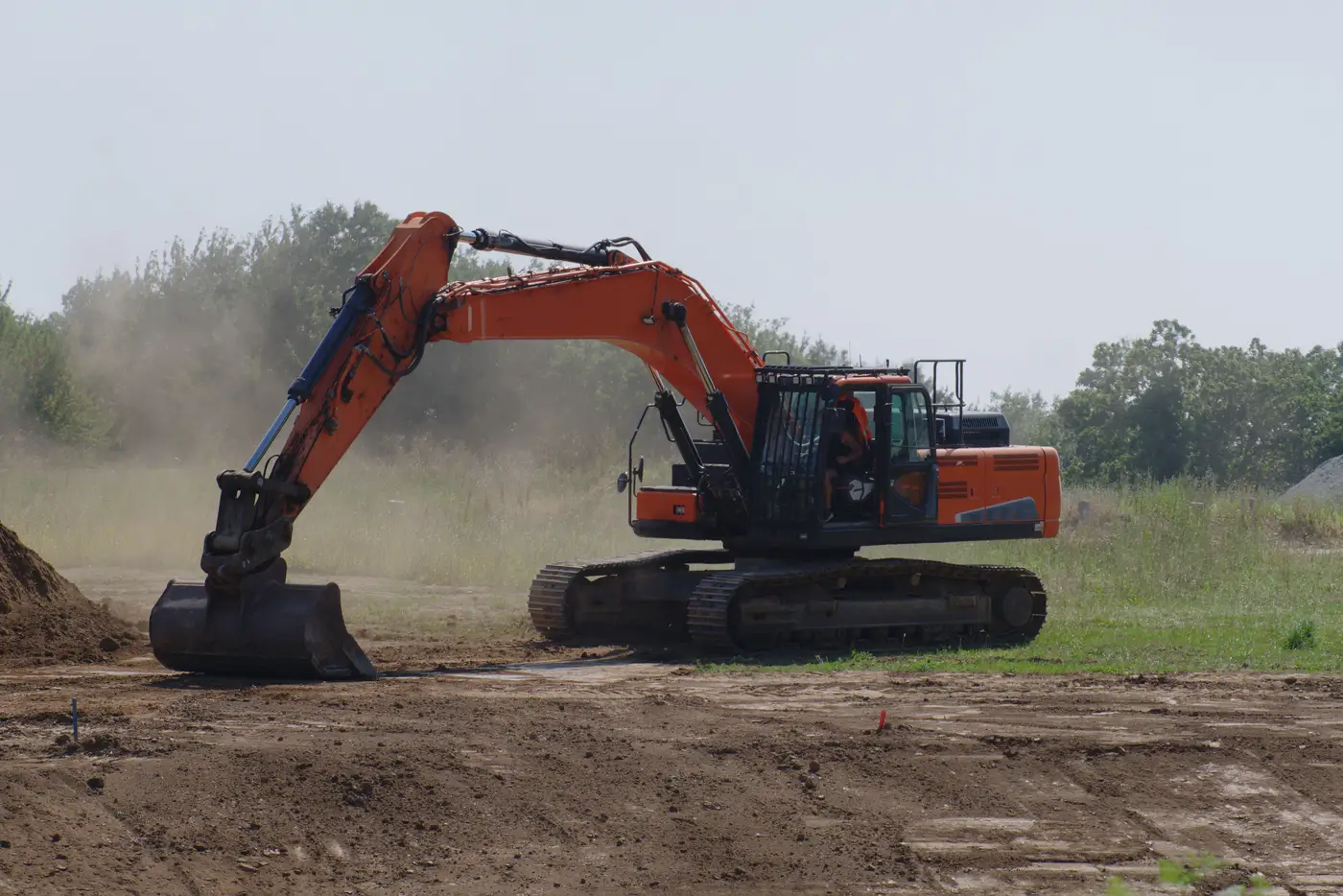
None of that submittal traffic is visible from the street, and most of it isn't public record either. What's visible is what shows up on site once a trade starts work: the tower crane goes up when structure starts, the excavators and spoil piles show up during groundworks, framing material gets laid down once that submittal clears and the order ships. Those physical tells lag the actual submittal approval by whatever delivery takes, but they're a far better read than a start date pulled off a permit filing. They tell you the product for that phase already cleared paper and is on site or about to be.
That's the lag Plant On Site works against. It reads what's parked and stacked on a site from aerial and satellite imagery and sorts your list by build stage, groundworks, structure, fit-out, updated roughly every two weeks, so your first call lands on a job that's squarely in your window instead of one where the submittal for your trade cleared six weeks back.
If your list is still sorted by groundbreaking date, it's worth seeing what it looks like sorted by build stage instead.